There's another vaccine you should be getting – against cervical and penile cancer
Advertizement
Health
There'south some other vaccine you lot should be getting – against cervical and penile cancer
The focus these days is on COVID-19, merely at some point, sexually active women and men should also remember nigh getting protection from HPV. CNA Lifestyle asks doctors why.
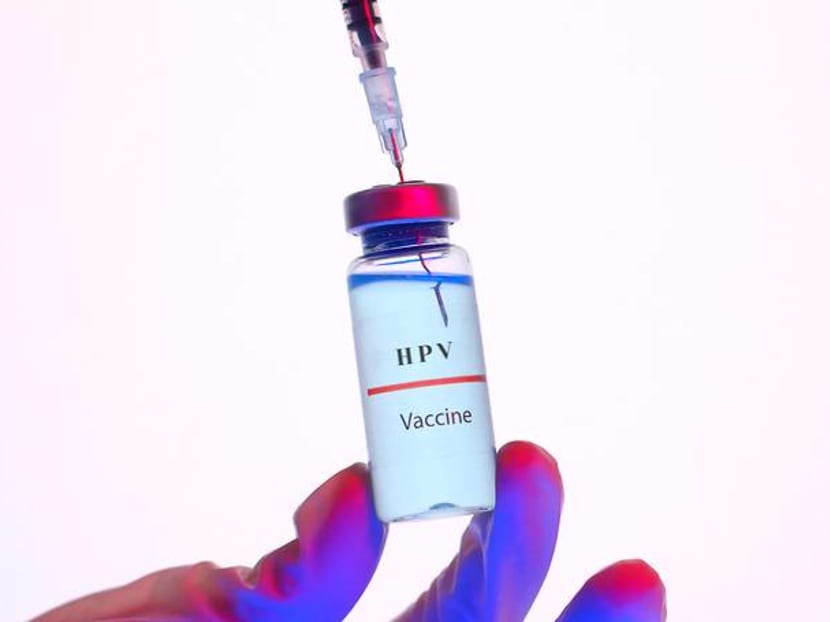
(Photograph: Pexels/Artem Podrez)
10 May 2022 06:30AM (Updated: 08 Aug 2022 11:50AM)
When people recall of vaccines these days, it'south admittedly – and understandably – got to do with COVID-nineteen. But that doesn't mean we shouldn't exist aware of other vaccines dealing with other important aspects of our health.
I of these has to do with the homo papillomavirus or HPV, a sexually transmitted virus that could – through persistent infection over time – lead to cervical cancer in women, penile cancer in men besides as anal cancer in both genders.
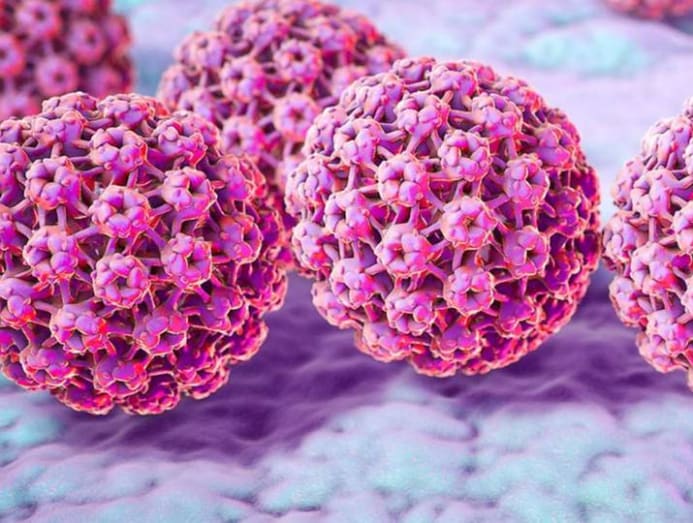
The vaccines for HPV aren't a new thing. Three of these – Cervarix, Gardasil and Gardasil ix – are already bachelor in Singapore. In fact, if you lot are a parent of a teenage daughter, you would be aware of Cervarix being offered to Secondary 1 and two female students for gratuitous under the National Schoolhouse-based HPV program.
And up until 2020, these vaccines were approved for apply from ages nine to 26 (upwards to age 25 for Cervarix). But last September, the Wellness Sciences Authorisation approved for Gardasil 9 to be used past both men and women from ages 27 to 45. This means that it is now allowed to cover both men and women from ages nine to 45.
Only, you might be thinking, what'south the betoken of considering getting the HPV vaccine at an age when you're already sexually agile? Wouldn't you be exposed to the HPV already?
There is some truth to that. "It is estimated that eighty per cent of sexually agile men and women tin can get HPV infections in their lifetime," said Dr Chris Chong, an obstetrician, gynaecologist and urogynaecologist at Gleneagles Hospital's Chris Chong Women and Urogynae Centre.
Notwithstanding, individuals can yet derive some benefit from the HPV vaccine, even when they are already sexually agile. This is because there are over 200 subtypes or strains of the HPV, according to the National University Cancer Establish Singapore (NCIS) website, merely only a small handful are regarded as "high risk". In that location is a take chances you might not take been exposed to these strains.
Cervical cancer is the 2d leading cause of cancer deaths in women 15 to 44 years old in Singapore.
For women, it is likewise worth because considering cervical cancer is a silent killer. "Women with cervical pre-cancers are usually asymptomatic until the development of cervical cancer, where i can present with symptoms such as bleeding after sexual intercourse, bleeding after menopause and abnormal vaginal belch," said Dr Lim Li Min, an associate consultant with the Sectionalisation of Gynaecologic Oncology at the NCIS and National Academy Hospital.
WHY SHOULD OLDER ADULTS GET THE VACCINE, TOO?
HPV infection is obviously very common, almost similar the common common cold, according to the NCIS website. Fortunately, cervical cancer develops only in a very small percentage of the total number of HPV infections; the majority of our allowed systems are able to clear the infections effectively.
READ: HPV can cause cancers in both genders – so should boys be vaccinated too?
Merely here's the thing: "People in their 40s to 50s are not equally healthy or have as loftier a resistance compared to those in their 20s," said Dr Chong. Furthermore, "they are definitely more sexually active compared to people in their 70s. Therefore, the chances of them getting an HPV infection are college."And the statistics support that, too. Cervical cancer is the fifth-nearly mutual cancer killing women in their 30s, and sixth-virtually common in the 40s age group, co-ordinate to the latest 2022 report from the Singapore Cancer Registry.
"Cervical cancer is the second leading cause of cancer deaths in women 15 to 44 years quondam in Singapore," said Dr Chong, citing the 2022 Human Papillomavirus And Related Diseases Study past the HPV Data Centre.
Moreover, there is no effective way to know whose allowed system can effectively clear high-risk HPV and which tin can't, noted the NCIS website.
WHAT KIND OF PROTECTION DO THE VACCINES Offer?
Each of the vaccines protects against a few HPV subtypes – namely the two most common high-risk ones, 16 and 18. According to Healthhub.com, they are responsible for about 70 per cent of cervical cancer cases.
READ: Is heavy menstrual haemorrhage normal? And what does eating pineapple have to do with it?
For example, Cervarix protects confronting the same HPV subtypes 16 and 18; Gardasil against four subtypes, including xvi and 18; and Gardasil 9 guards confronting nine subtypes, including sixteen, 18, 52 and 58 – the terminal two beingness the tertiary- and fifth-most prevalent strains to cause cervical cancer in women in Singapore, said Dr Chong.
So even if someone has been infected with one HPV subtype earlier, he or she tin can nonetheless benefit from a vaccine to protect against other HPV subtypes that the person has not been exposed to, explained Dr Chong. It is besides "extremely rare" to be infected by all the HPV types included in the vaccine, he added.
Every bit with other vaccines, the HPV vaccine does non provide 100 per cent protection against HPV infection, said Dr Lim.
"Even if 1 has been vaccinated but has a strong family history of cancer, particularly genital cancer, has a sexually transmitted disease or many sexual partners, especially from a young age, one is even so at high risk of cervical cancer," said Dr Chong. "Lifestyle choices likewise heightens cancer risks, such equally chronic smoking."
"It is recommended that all sexually active women between 25 and 29 years one-time undergo Pap smear every three years, and those between thirty and 69 years undergo the HPV examination every five years," recommended Dr Lim.
HPV subtypes 6 and 11 are responsible for about 90 per cent of genital warts in both genders.
So HOW ARE MEN Afflicted?
It's not merely women and cervical cancer. Near forty HPV strains, including the cervical cancer-causing subtypes 16 and 18, are known to crusade anal or penile cancer in men, according to Healthhub.com. HPV subtypes half-dozen and eleven are responsible for well-nigh 90 per cent of genital warts in both genders.
"Compared to women, men are actually at a higher adventure of HPV infections as at that place are no routine screenings available for men (women at least have the Pap smear) to test if they accept HPV," said Dr Chong.
"Unlike women, men's chances of getting the HPV practise not decrease with age. Instead, the HPV increases a man'southward adventure of anal cancer and is responsible for 85 to 91 per cent of anal cancer cases. Genital warts can also develop, which usually appear as a small crash-land or group of bumps in the genital area."
In fact, persistent HPV infection is known to be responsible for these weather condition:
- 99 per cent of cervical cancer
- More than 90 per cent of genital warts
- 85 to 90 per cent of anal cancer and oral cancer
- lxx to 75 per cent of vaginal cancer
- thirty per cent of vulvar cancer
SHOULD You Infinite OUT THE HPV AND COVID-19 VACCINES?
With the focus on the COVID-xix vaccines these days, the inevitable question is: What is the minimal interval between receiving the coronavirus shots and the HPV vaccines? Comport in listen that at that place are three HPV doses to be administered; with the 2nd shot given after two months and the final one subsequently six months.
READ: Sharper brain, higher pain threshold – here's how to take advantage of your cycle
"There is currently no data stopping the ii vaccines – HPV and COVID-19 vaccines – from beingness given simultaneously," said Dr Chong.
Taking the cue from the Us Centers for Disease Command and Prevention, Dr Lim suggested "a minimal interval of 14 days before or afterwards administration of any other vaccine, including the HPV vaccine".
Women beneath age 26 tin can utilize their MediSave accounts to pay for the Cervarix and Gardasil vaccines but not the Gardasil 9 vaccine, which ranges from South$800 to S$1,000 for the three doses. The HPV vaccines are available at public and individual hospitals, polyclinics, family clinics and gynaecological clinics. Gardasil ix is not bachelor at polyclinics.
Speak to your doctor for more information on HPV infection and vaccines.

0 Response to "There's another vaccine you should be getting – against cervical and penile cancer"
Post a Comment